Post
Moleskine Classic Ruled Notebook: Inside the World’s Most Famous Notebook 2026
May
Moleskine Classic Ruled Notebook: Inside the World’s Most Famous Notebook
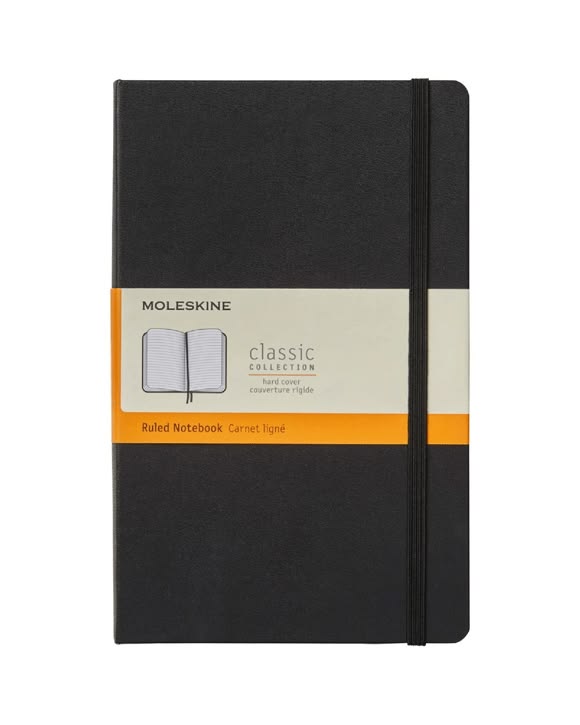
The Moleskine Classic Ruled Notebook occupies a unique position in the world of paper goods — it is simultaneously a premium stationery product, a cultural artifact, and a brand story so effectively constructed that millions of people feel a personal connection to a simple bookbinding tradition. The black rectangular notebook with its elastic band closure and ribbon bookmark has become a symbol of creative seriousness, intellectual aspiration, and the enduring relevance of handwriting in a digital world. Understanding why it commands its price and its passionate following requires looking at both what it is and what it represents.
The Moleskine Mythology
Moleskine’s brand narrative positions its product as the direct descendant of the small black notebooks used by Vincent van Gogh, Pablo Picasso, Ernest Hemingway, and Bruce Chatwin. The connection is historical rather than corporate — these figures used similar notebooks from Parisian stationers, and when those stationers ceased production in the 1980s, the Moleskine company was founded in 1997 to revive the tradition. Whether one accepts the narrative fully or with the appropriate dose of skepticism, it has proven remarkably effective at positioning the notebook as a tool with creative and intellectual heritage.
This narrative framing has real consequences for how users experience the notebook. Many Moleskine writers report a heightened intentionality — a sense that what they write in the notebook matters, is worth preserving, connects them to a tradition of serious creative thought. Whether this feeling is produced by the notebook itself or by the stories surrounding it matters less than the fact that it produces genuine engagement with handwriting practice and creative thought that users value.
Physical Specifications and Quality
The Classic Ruled Notebook is available in Pocket (3.5 × 5.5 inches), Large (5 × 8.25 inches), and Extra Large (7.5 × 10 inches) formats. The Large format is by far the most popular, providing a page area comfortable for ordinary handwriting without being large enough to feel unwieldy. The ruling is set at 5mm spacing — narrower than typical American ruled paper — which accommodates European handwriting conventions and produces pages with a visually clean, dense line pattern when filled.
The paper weight of 70 g/m² is adequate for most ballpoint, rollerball, and pencil use but shows through-bleed and ghosting with fountain pens and heavy-nib rollerball pens. This is the most frequently criticized aspect of the Moleskine — the paper does not match the premium positioning of the notebook’s other qualities, and serious fountain pen users often find it unsatisfactory. For users who primarily write with ballpoint or rollerball pens, the paper performs well; for fountain pen enthusiasts, better paper options are available from competitors.
The Physical Design: Thoughtful Details
The Moleskine’s physical design incorporates several thoughtful details that contribute to its usability. The elastic band closure secures the notebook reliably without the bulk of a traditional clasp, and its tension is calibrated to hold firmly when closed while releasing easily when the notebook is opened. The ribbon bookmark — a feature borrowed from high-quality traditional bookbinding — allows the user to mark their current page without requiring any external bookmark that could be lost or damaged.
The expandable inner pocket at the back cover provides storage for loose papers, receipts, business cards, and other flat materials that accumulate during active notebook use. For travelers and field note-takers who use their notebook as a repository for everything related to a project or trip, this pocket adds practical value beyond the lined pages. The rounded corners of the cover prevent the dog-earing that occurs when squared corners catch on bags and pockets.
Writing Systems and Use Cases
The Moleskine’s ruled format is suited to prose writing, meeting notes, journaling, and list-making — the core use cases of the classic notebook. The ruled lines provide alignment guidance without restricting content structure as rigidly as narrowly spaced ruling. Many users develop their own page organization systems within the ruled format: running headers that date entries, margin annotations in different ink colors, post-it tabs to mark significant entries.
For writers who want a notebook that imposes minimal structure and allows maximum freedom, the blank version of the Moleskine Classic provides empty pages that accommodate diagrams, sketches, mind maps, and free-form organization. The dotted version — perhaps the most popular variant among bullet journal practitioners — provides subtle alignment guides visible enough to facilitate grid-based layout but invisible enough to disappear in final output photographs.
Community and Culture
Moleskine has cultivated an active creative community through partnerships with artists, writers, and creative institutions, and through platforms that allow users to share their notebook work. This community dimension adds value to the product by creating social connection around the practice of using it. Seeing how other people use their Moleskines — the organizational systems, the artistic expressions, the written archives — inspires new approaches and deepens engagement with the practice of handwriting.
Conclusion
The Moleskine Classic Ruled Notebook is a premium product that delivers genuine quality in its binding, design, and physical details, and wraps that quality in a cultural narrative that makes using it feel meaningful. The paper quality limitation is real and relevant for fountain pen users, but for the majority of writers using ballpoint, rollerball, or pencil instruments, the Moleskine delivers an experience that justifies its position as the world’s most recognized premium notebook. Write in one long enough, and you may understand why its users defend it so passionately.
Final Thoughts and Long-Term Value
One of the reasons this product continues to remain popular among students, professionals, hobbyists, and collectors is the balance it offers between affordability, reliability, and everyday usefulness. Many products become successful for a short period because of trends, marketing campaigns, or social media attention, but truly excellent tools continue to be recommended for years because users trust them in practical situations. A dependable writing or office tool becomes part of a person’s daily routine, and over time that familiarity creates a stronger appreciation for the product’s design and consistency.
Another important factor is versatility. Whether the product is being used in schools, offices, creative studios, or at home, it adapts well to different environments and different working styles. People often underestimate how much productivity and comfort can improve when they use tools that are thoughtfully designed. Small details such as grip comfort, balanced weight, smooth performance, refillability, durability, and portability all contribute to a better overall experience. These qualities are especially valuable for people who spend many hours writing, organizing, drawing, planning, or studying.
In addition to functionality, the product also reflects broader trends in modern stationery culture. Over the past decade, interest in premium stationery and high-quality office supplies has increased dramatically around the world. Many consumers now see stationery not only as a practical necessity but also as a form of self-expression and creativity. This shift has encouraged manufacturers to improve aesthetics, expand color selections, refine materials, and introduce features that make everyday tasks more enjoyable. As a result, products like this continue to gain loyal communities of enthusiasts who share recommendations, reviews, and creative uses online.
Durability also plays a major role in long-term value. A product that lasts for years reduces waste and provides better value compared to disposable alternatives that need frequent replacement. Consumers are increasingly paying attention to sustainability, and reusable or refillable stationery products align well with those priorities. High-quality construction means the product can maintain strong performance over extended periods, making it a worthwhile investment for people who value dependable tools.
Ultimately, the enduring success of this product comes from its ability to combine thoughtful engineering, user comfort, visual appeal, and practical reliability into a single experience. It is easy to recommend because it consistently delivers what users expect while also offering small details that improve everyday tasks in meaningful ways. Whether someone is discovering the product for the first time or has been using it for years, it remains one of the strongest options available in its category and continues to set a high standard for competitors across the stationery industry.
