Post
Faber-Castell Pitt Artist Pen: The Professional’s Choice for Ink Drawing and Illustration Best 2026
May
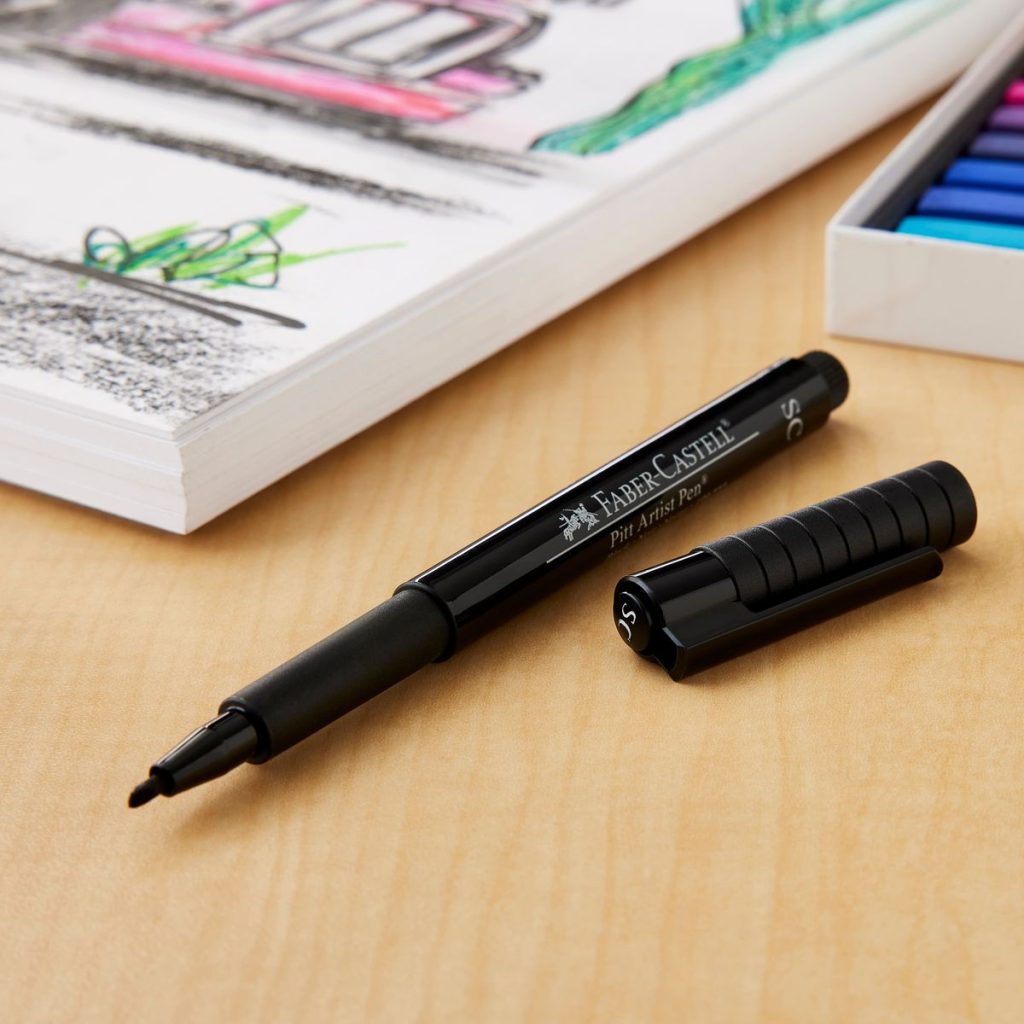
Faber-Castell Pitt Artist Pen: The Professional’s Choice for Ink Drawing and Illustration
Faber-Castell is one of the oldest and most prestigious names in the writing and art supply industry — founded in 1761 in Stein, Germany, the company has been manufacturing quality writing and drawing instruments for over 260 years. The Pitt Artist Pen represents one of Faber-Castell’s finest contemporary offerings in the professional art supply category: a range of India ink-based drawing pens that deliver museum-quality permanence, exceptional nib variety, and the kind of consistent performance that professional illustrators and fine artists demand from their tools.
India Ink and Archival Quality
The Pitt Artist Pen uses India ink — a carbon-black pigment-based ink with a history stretching back thousands of years — in a modern technical pen delivery system. Carbon black India ink has been used for permanent illustration and manuscript work since ancient times precisely because of its exceptional stability: properly made India ink resists fading from light exposure, does not yellow over time, and remains legible and visually vivid across centuries. The Pitt Artist Pen brings this archival performance to a convenient, controlled pen format that eliminates the mess and inconsistency of traditional India ink and dip pen use.
The ink is also water-resistant once dried — a property that enables pen-and-wash techniques where watercolor or ink washes are applied over established linework without bleeding or reactivating the pen marks. This water resistance is one of the most practically important properties of the Pitt pen for illustrators who work in mixed media, enabling the free application of liquid media over completed linework without the anxiety of accidental smearing.
The Nib Range: Comprehensive Coverage
Faber-Castell offers the Pitt Artist Pen in an exceptionally comprehensive range of nib configurations, making it one of the most versatile professional drawing pen ranges available. The S (Superfine) nib produces hair-fine lines for the most detailed technical work. The F (Fine) nib adds weight appropriate for detailed linework in illustration and technical drawing. The M (Medium) and B (Bold) nibs provide progressively heavier marks suited to confident structural lines and fill work.
The SB (Soft Brush) nib is a flexible brush nib similar to the Tombow Dual Brush Pen, providing pressure-sensitive calligraphic marks. The 1.5 and 2.5 size nibs produce extremely bold marks suitable for headers, signage, and broad fill work. Finally, the Big Brush nib is a large flexible nib for expressive, gestural mark-making in ink.
The Brush Nib: Bridging Drawing and Painting
The Pitt Artist Pen’s brush nib variant deserves particular attention as one of the most popular and praised configurations in the range. The flexible synthetic brush nib delivers the pressure-sensitive mark-making that brush calligraphers and expressive illustrators require, while the India ink formulation provides the permanence and water resistance that traditional brushes with India ink deliver, but in a far more convenient and controllable format.
The brush nib’s size is calibrated to produce marks ranging from a very fine hairline to a robust medium stroke, covering the range needed for most calligraphic and illustrative work. The nib’s memory — its tendency to return to its resting shape after compression — is well-managed, allowing consistent mark-making without the nib spreading progressively wider with each stroke as some brush pens can do under intensive use.
Color Range
While the Pitt Artist Pen is perhaps most associated with its black India ink versions, Faber-Castell offers the pen in an extensive palette of colors. The range includes a full spectrum of transparent and opaque colors alongside specialty inks including sepia, sanguine, warm gray, and cool gray that are particularly valued for tonal drawing and illustration work. The sepia and warm tone inks are favorites among artists who work in historical illustration styles or who want the warmth of old-manuscript aesthetics in contemporary work.
The colored Pitt inks are formulated to the same archival standards as the black India ink versions, providing lightfast colors that will not fade significantly over the decades — an important consideration for artists selling original artwork or creating pieces intended for long-term preservation.
Paper Performance and Technique
The Pitt Artist Pen performs optimally on smooth to medium-textured papers. On hot-press watercolor paper and smooth Bristol board, the nib glides cleanly and produces crisp, well-defined lines with excellent edge definition. On cold-press watercolor papers, the rougher texture adds natural variation to drawn lines that many artists value for expressive work. The pen should not be used on heavily textured surfaces where the nib could catch in the paper texture and damage the tip.
Maintenance and Longevity
Pitt Artist Pens are not refillable, which is their primary practical limitation for intensive professional use. The pen’s lifespan depends heavily on nib size, paper texture, and usage intensity. Finer nibs on textured papers wear more quickly than broader nibs on smooth surfaces. Keeping caps replaced when not in use prevents premature drying of the nib, which is the most common cause of reduced performance. Stored properly, Pitt Artist Pens maintain performance for their full ink life.
Conclusion
The Faber-Castell Pitt Artist Pen is one of the finest professional drawing pens available, combining archival India ink with an exceptional nib variety and quality construction that meets the demanding standards of professional illustration and fine art. For artists who care about the permanence and quality of their linework, the Pitt Artist Pen provides performance that rewards serious practice and professional application with results that will endure for generations.
Final Thoughts and Long-Term Value
One of the reasons this product continues to remain popular among students, professionals, hobbyists, and collectors is the balance it offers between affordability, reliability, and everyday usefulness. Many products become successful for a short period because of trends, marketing campaigns, or social media attention, but truly excellent tools continue to be recommended for years because users trust them in practical situations. A dependable writing or office tool becomes part of a person’s daily routine, and over time that familiarity creates a stronger appreciation for the product’s design and consistency.
Another important factor is versatility. Whether the product is being used in schools, offices, creative studios, or at home, it adapts well to different environments and different working styles. People often underestimate how much productivity and comfort can improve when they use tools that are thoughtfully designed. Small details such as grip comfort, balanced weight, smooth performance, refillability, durability, and portability all contribute to a better overall experience. These qualities are especially valuable for people who spend many hours writing, organizing, drawing, planning, or studying.
In addition to functionality, the product also reflects broader trends in modern stationery culture. Over the past decade, interest in premium stationery and high-quality office supplies has increased dramatically around the world. Many consumers now see stationery not only as a practical necessity but also as a form of self-expression and creativity. This shift has encouraged manufacturers to improve aesthetics, expand color selections, refine materials, and introduce features that make everyday tasks more enjoyable. As a result, products like this continue to gain loyal communities of enthusiasts who share recommendations, reviews, and creative uses online.
Durability also plays a major role in long-term value. A product that lasts for years reduces waste and provides better value compared to disposable alternatives that need frequent replacement. Consumers are increasingly paying attention to sustainability, and reusable or refillable stationery products align well with those priorities. High-quality construction means the product can maintain strong performance over extended periods, making it a worthwhile investment for people who value dependable tools.
Ultimately, the enduring success of this product comes from its ability to combine thoughtful engineering, user comfort, visual appeal, and practical reliability into a single experience. It is easy to recommend because it consistently delivers what users expect while also offering small details that improve everyday tasks in meaningful ways. Whether someone is discovering the product for the first time or has been using it for years, it remains one of the strongest options available in its category and continues to set a high standard for competitors across the stationery industry.
