Post
Best Field Notes Kraft Ruled Memo Books 2026: The American Pocket Notebook Tradition Revived
May
Field Notes Kraft Ruled Memo Books: The American Pocket Notebook Tradition Revived
There is something genuinely nostalgic about the Field Notes Kraft Ruled Memo Book — and that nostalgia is entirely deliberate. Field Notes Brand, founded in Chicago in 2007 by Aaron Draplin and Jim Coudal, set out to revive the tradition of the American pocket memo book — the small, sturdy, utilitarian notebooks that farmers, railroad workers, hardware store employees, and tradespeople used throughout the twentieth century to keep track of the information their work required. The result is a notebook that feels simultaneously like a historical artifact and a perfectly contemporary tool.
The Inspiration: Agricultural and Industrial Notebooks
The Field Notes design draws directly from the promotional memo books distributed by seed companies, cooperative stores, and agricultural suppliers across the American Midwest throughout the mid-twentieth century. These books were functional first — small enough for a shirt pocket, durable enough for field use, available enough to be freely given away — and their design reflected these priorities. Bold typography, simple layouts, utilitarian cover graphics, and honest materials characterized these books.
Draplin, a graphic designer with a deep personal affinity for this Americana tradition, translated these qualities into a premium product that honors the original aesthetic while meeting contemporary quality expectations. The kraft paper cover, the saddle-stitched binding, the simple ruled pages, and the utilitarian typography are all direct references to the historical inspirations, executed with the craft and precision of modern design production.
Physical Specifications
The standard Field Notes memo book measures 3.5 × 5.5 inches — classic pocket notebook size that fits easily in a shirt pocket, back pants pocket, or the small front pocket of work pants. At 48 pages per book (sold in sets of three), each volume provides enough space for several days of intensive note-taking or several weeks of more occasional use. The saddle-stitched binding — staples through the spine — is simple, reliable, and fully flat-opening, which is appropriate for the quick, functional note-taking the book is designed to support.
The ruling in the standard Kraft edition uses a simple horizontal line spacing that accommodates ordinary handwriting without the excessive generosity of American wide-ruled paper or the severity of narrow European ruling. The ruling color is a warm gray that provides adequate alignment guidance while remaining visually unobtrusive — appropriate for a book whose aesthetic emphasizes the handwriting over the notebook’s own design elements.
The Kraft Cover
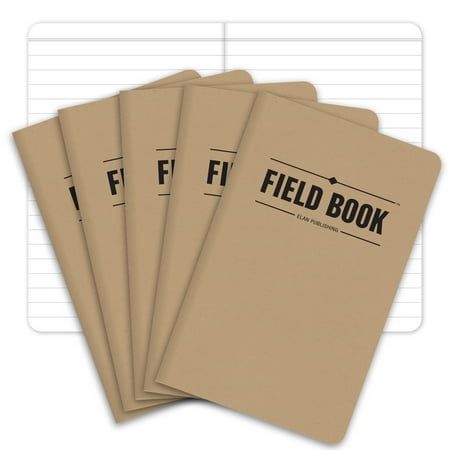
The kraft paper cover is central to the Field Notes aesthetic. Kraft paper’s warm brown tone, its visible natural fiber texture, and its association with utilitarian American products — paper bags, shipping packaging, industrial materials — all contribute to the honest, unpretentious feeling that Field Notes pursues. The cover is thick enough to provide writing support when the book is used without a desk surface, a practical requirement for a pocket notebook intended for field use.
The cover graphic — a simple typographic design that references mid-century American graphic design conventions — is printed in a rich black that shows well against the kraft background. The overall visual effect is of something both old and perfectly designed, a combination that has proven deeply appealing to an audience with sophisticated visual taste and appreciation for design history.
The Limited Edition Culture
Field Notes has built an extraordinary community through its seasonal limited edition program, which produces new notebook designs four times per year in limited quantities. These seasonal editions use special cover materials, custom ruling configurations, unusual paper stocks, and unique graphic designs that explore different aspects of American visual culture. Edition themes have included road maps, graph paper designed for specific technical applications, photographic covers, metallic materials, and countless other creative explorations.
The limited edition program has created a passionate collector community — the Field Notes Colors subscription — that ensures each new edition sells out quickly and creates secondary market demand for rare and discontinued editions. For many collectors, Field Notes editions function as miniature graphic design artifacts to be collected and preserved alongside the core product that serves daily writing needs.
Paper Performance
The standard Kraft edition uses 50# Finch Opaque paper — a lightweight stock appropriate for pencil and ballpoint pen use. The paper is not intended for fountain pens or heavy gel pens and will show bleed-through and feathering with these instruments. For the pencil, ballpoint, and fine-point rollerball use that characterizes most pocket notebook use, the paper performs adequately and appropriately. The lightness of the stock contributes to the notebook’s slim profile and pocket-friendly weight.
Daily Carry Practice
The Field Notes pocket notebook advocates for a specific relationship with analog note-taking: always having a small, ready notebook available for immediate capture of ideas, measurements, phone numbers, tasks, and observations. This “always carry” philosophy has a long tradition in productivity and creative culture, advocated by everyone from Leonardo da Vinci to contemporary knowledge workers who have discovered that the physical act of note capture improves both retention and the quality of subsequent thought.
Conclusion
Field Notes Kraft Ruled Memo Books are an authentic, beautifully designed revival of an important American utilitarian tradition. They perform their intended function — pocket note-taking with pencil or ballpoint — reliably and with a character that mass-produced notebooks cannot match. For everyday carry note-taking, idea capture, and the simple pleasure of a well-designed physical object in your pocket, Field Notes delivers an experience that is greater than the sum of its modest parts.
Final Thoughts and Long-Term Value
One of the reasons this product continues to remain popular among students, professionals, hobbyists, and collectors is the balance it offers between affordability, reliability, and everyday usefulness. Many products become successful for a short period because of trends, marketing campaigns, or social media attention, but truly excellent tools continue to be recommended for years because users trust them in practical situations. A dependable writing or office tool becomes part of a person’s daily routine, and over time that familiarity creates a stronger appreciation for the product’s design and consistency.
Another important factor is versatility. Whether the product is being used in schools, offices, creative studios, or at home, it adapts well to different environments and different working styles. People often underestimate how much productivity and comfort can improve when they use tools that are thoughtfully designed. Small details such as grip comfort, balanced weight, smooth performance, refillability, durability, and portability all contribute to a better overall experience. These qualities are especially valuable for people who spend many hours writing, organizing, drawing, planning, or studying.
In addition to functionality, the product also reflects broader trends in modern stationery culture. Over the past decade, interest in premium stationery and high-quality office supplies has increased dramatically around the world. Many consumers now see stationery not only as a practical necessity but also as a form of self-expression and creativity. This shift has encouraged manufacturers to improve aesthetics, expand color selections, refine materials, and introduce features that make everyday tasks more enjoyable. As a result, products like this continue to gain loyal communities of enthusiasts who share recommendations, reviews, and creative uses online.
Durability also plays a major role in long-term value. A product that lasts for years reduces waste and provides better value compared to disposable alternatives that need frequent replacement. Consumers are increasingly paying attention to sustainability, and reusable or refillable stationery products align well with those priorities. High-quality construction means the product can maintain strong performance over extended periods, making it a worthwhile investment for people who value dependable tools.
Ultimately, the enduring success of this product comes from its ability to combine thoughtful engineering, user comfort, visual appeal, and practical reliability into a single experience. It is easy to recommend because it consistently delivers what users expect while also offering small details that improve everyday tasks in meaningful ways. Whether someone is discovering the product for the first time or has been using it for years, it remains one of the strongest options available in its category and continues to set a high standard for competitors across the stationery industry.
