Post
Tombow Dual Brush Pen Art Markers: Mastering Brush Lettering and Illustration Best 2026
May
Tombow Dual Brush Pen Art Markers: Mastering Brush Lettering and Illustration
The convergence of the hand lettering renaissance and the bullet journal movement created enormous demand in the mid-2010s for a specific type of tool: a marker that could produce the expressive, pressure-sensitive lines of a traditional brush — thick downstrokes, thin upstrokes, dynamic transitions — in a convenient, controllable pen format with consistent color. The Tombow Dual Brush Pen Art Marker answered that demand better than any competitor and remains the defining tool of the modern hand lettering and brush calligraphy community.
The Flexible Brush Tip: Where the Magic Happens
The Tombow Dual Brush Pen’s primary tip is a flexible brush nib made from a specially formulated synthetic fiber that mimics the behavior of a traditional watercolor brush. The nib comes to a fine point when minimal pressure is applied, producing thin, precise hairline strokes. As writing or drawing pressure increases, the nib flexes and spreads, producing progressively wider marks. Maximum pressure produces a broad, sweeping stroke that can be several millimeters wide, depending on the specific technique and nib angle used.
This pressure sensitivity is the fundamental property that enables brush lettering — the art of creating calligraphic letterforms through variation in stroke thickness rather than the static uniform lines of ordinary marker pens. Traditional calligraphy achieves similar effects through the split nib of a dip pen or the flexibility of a pointed metal nib, both of which require significant skill and specialized equipment to use effectively. The Tombow’s brush tip makes the same expressive range available to beginners at a fraction of the skill investment, while offering experienced calligraphers a portable, consistent alternative to traditional tools.
The Fine Tip: Precision Work and Outlines
The second tip on the opposite end of the Tombow Dual Brush Pen is a firm 0.8mm bullet tip that produces a consistent fine line regardless of pressure. This tip serves functions that the flexible brush nib cannot perform effectively: consistent outlines, fine text, precise detail work, and controlled line drawing where pressure sensitivity would be a liability rather than an asset.
The combination of both tips in a single marker creates an extraordinarily versatile tool. A hand lettering artist can render the main letterforms with the brush nib, add fine decorative details with the bullet nib, and maintain exact color matching between both elements — all with a single pen. A planner or bullet journalist can create expressive headers with the brush tip and add supporting text with the fine tip, building a visually cohesive spread that uses both scales of mark-making within a unified color palette.
Ink Quality and Color Range
Tombow’s water-based dye ink is formulated for vibrancy and blendability. The ink is vibrant enough to produce rich, saturated colors on white paper while remaining transparent enough to allow layering and blending without producing muddy results. The water-based formulation means the ink is acid-free, which is important for work in journals and books intended for long-term preservation.
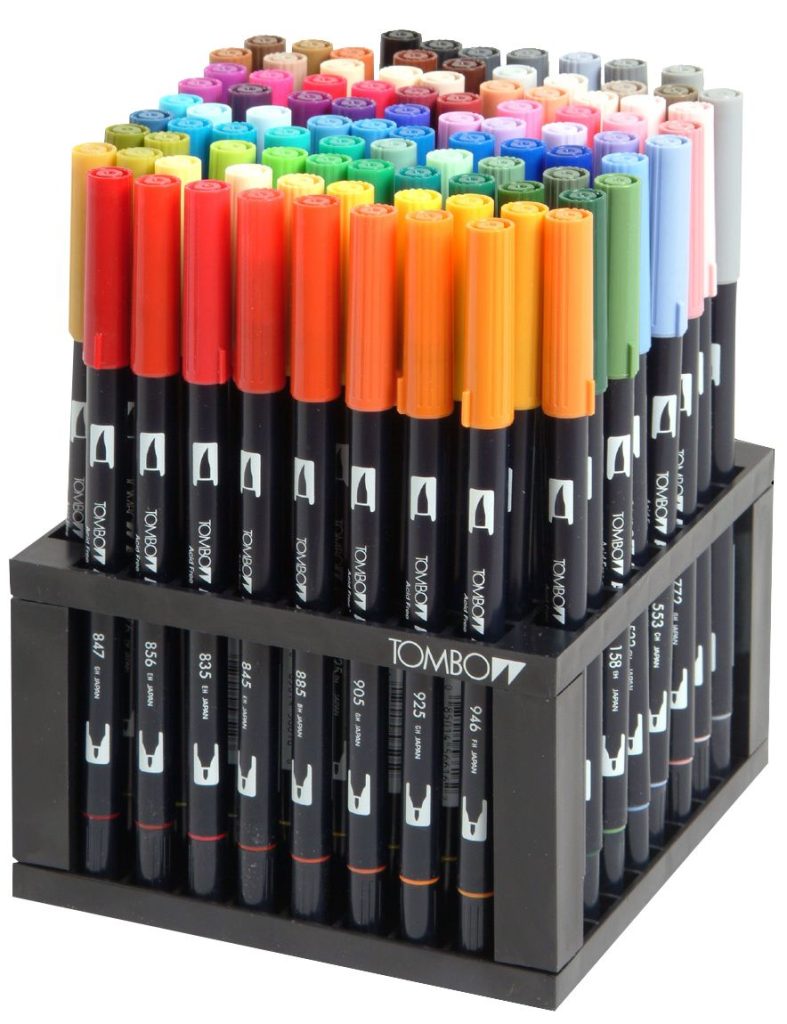
Tombow offers the Dual Brush Pen in over 100 individual colors organized into a system of warm and cool neutrals, bright saturated hues, and carefully balanced pastels. The color range has been developed with blending relationships in mind — adjacent colors in the Tombow numbering system are specifically chosen to blend smoothly, enabling gradient effects and color transitions that rival those achievable with traditional watercolor. Understanding the Tombow numbering system and stocking colors in blending families is a key technique among advanced users.
Blending Techniques
Blending is one of the Tombow Dual Brush Pen’s most celebrated capabilities and a major contributor to its popularity in the hand lettering and illustration community. The primary blending technique involves using a colorless Tombow Blender pen to move and mix ink applied from color pens, creating gradients and transitions. The Blender pen works by introducing additional moisture to the ink, making it flow and mix where the two pens meet.
Direct pen-to-pen blending is another technique: by touching the tips of two color pens together briefly, ink transfers from one tip to the other, creating a new blended color at the nib. This technique enables in-place color mixing and produces multi-colored nibs capable of rendering gradient effects with a single stroke. Advanced practitioners use both techniques in combination to create complex color effects that closely resemble traditional illustration media.
Paper Recommendations
The Tombow’s water-based ink interacts significantly with paper choice. On thin papers with low absorbency, the ink can bleed through to the reverse side and dry time is extended, increasing the risk of smearing. On highly absorbent papers, the ink absorbs quickly but colors can appear less vivid and blending becomes more difficult. Optimal performance comes on medium-weight smooth papers — Bristol smooth, Rhodia, and various marker pads specifically formulated for alcohol and water-based marker use — that accept the ink quickly enough to prevent bleed-through while remaining smooth enough for the brush nib to perform well.
Lettering Practice and Skill Building
For beginners starting their brush lettering journey with Tombow Dual Brush Pens, patience and deliberate practice are the keys to progress. The pressure sensitivity that makes the brush nib so expressive also makes it unforgiving of inconsistent technique — irregular pressure produces inconsistent strokes that reveal skill level clearly. Practicing on inexpensive paper with deliberate attention to consistent pressure application at different points in each stroke builds the muscle memory that eventually produces confident, consistent letterforms.
Conclusion
The Tombow Dual Brush Pen Art Marker is one of the most versatile and capable art markers available for hand lettering, illustration, and creative journaling. Its pressure-sensitive brush tip, complementary fine tip, extensive color range, and excellent blending capabilities make it a tool that rewards skill development while remaining accessible to beginners. For anyone serious about hand lettering or visual journaling, a collection of Tombow Dual Brush Pens is an essential investment.
Final Thoughts and Long-Term Value
One of the reasons this product continues to remain popular among students, professionals, hobbyists, and collectors is the balance it offers between affordability, reliability, and everyday usefulness. Many products become successful for a short period because of trends, marketing campaigns, or social media attention, but truly excellent tools continue to be recommended for years because users trust them in practical situations. A dependable writing or office tool becomes part of a person’s daily routine, and over time that familiarity creates a stronger appreciation for the product’s design and consistency.
Another important factor is versatility. Whether the product is being used in schools, offices, creative studios, or at home, it adapts well to different environments and different working styles. People often underestimate how much productivity and comfort can improve when they use tools that are thoughtfully designed. Small details such as grip comfort, balanced weight, smooth performance, refillability, durability, and portability all contribute to a better overall experience. These qualities are especially valuable for people who spend many hours writing, organizing, drawing, planning, or studying.
In addition to functionality, the product also reflects broader trends in modern stationery culture. Over the past decade, interest in premium stationery and high-quality office supplies has increased dramatically around the world. Many consumers now see stationery not only as a practical necessity but also as a form of self-expression and creativity. This shift has encouraged manufacturers to improve aesthetics, expand color selections, refine materials, and introduce features that make everyday tasks more enjoyable. As a result, products like this continue to gain loyal communities of enthusiasts who share recommendations, reviews, and creative uses online.
Durability also plays a major role in long-term value. A product that lasts for years reduces waste and provides better value compared to disposable alternatives that need frequent replacement. Consumers are increasingly paying attention to sustainability, and reusable or refillable stationery products align well with those priorities. High-quality construction means the product can maintain strong performance over extended periods, making it a worthwhile investment for people who value dependable tools.
Ultimately, the enduring success of this product comes from its ability to combine thoughtful engineering, user comfort, visual appeal, and practical reliability into a single experience. It is easy to recommend because it consistently delivers what users expect while also offering small details that improve everyday tasks in meaningful ways. Whether someone is discovering the product for the first time or has been using it for years, it remains one of the strongest options available in its category and continues to set a high standard for competitors across the stationery industry.
